No New Waste Water in Swan Lake

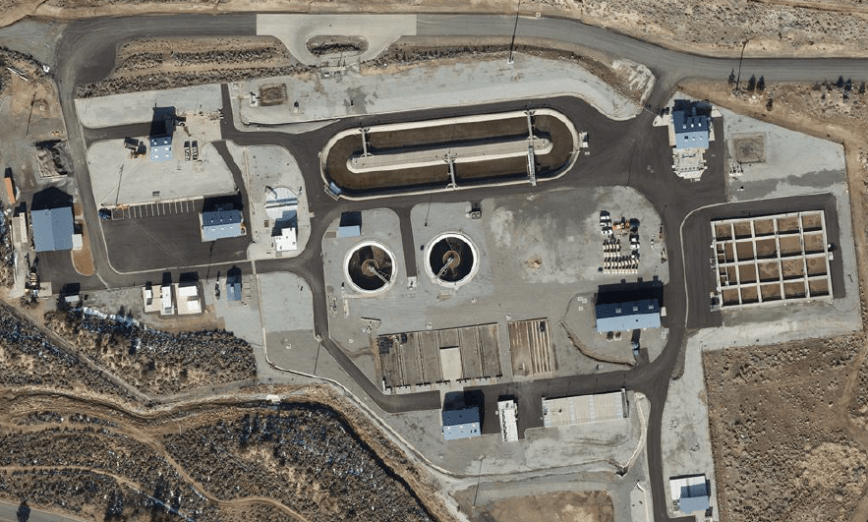
RSWRF_Aerial_01

The outlines of a plan to eliminate the contribution of waste water to the Swan Lake flooding emerged from the details about the Stead waste water plant expansion (RSWRF)  presentation.

Here are the salient points:

  • The RSWRF plant has sufficient capacity (2.0 mgd) to handle the Lemmon Valley waste water treatment plant (LVWRF; 0.3 mgd).
  • The RSWRF plant is much newer and treats the effluent to a Class-A standard.  The LVWRF plant is over 40 years old and treats the effluent to a Class-C standard.
  • The Truckee Meadows water treatment plant (TMWRF) has sufficient surplus capacity to treat all the RSWRF effluent to a standard that allows it to discharge into the Truckee River.
  • There is presently an unused pipe (line) from RSWRF to TMWRF that could be connected to transport all the RSWRF discharge to the TMWRF facility.  It has been identified as a “shave” line.

So, why not do the following?

  1. Declare a moratorium on new water and sewer hook ups until the waste water is diverted out of the Swan Lake basin.  New development now is only making the disaster worse.
  2. Close the LVWRF plant and connect its customers to the RSWRF plant.  The LVWRF plant is out of date, treats to a low standard, and requires earthen berms and pumps to avoid being flooded.
  3. Connect the available line to divert all the RSWRF discharge to the TMWRF facility.  Neither LVWRF nor RSWRF will discharge to Swan Lake.
  4. Rescind the moratorium and support new connections up to the capacity limits of the new configuration.

Moving forward more capacity will be needed to support the ambitious development plans for the North Valleys.  The regional plan is to add 17,000 more dwellings.  This will require some serious infrastructure spending in any case.

  1. Expand the RSWRF plant from the current 2.0 mgd capacity to 4.0 mgd capacity as proposed.
  2. Direct the effluent from the RSWRF plant to a new TMWA plant that will refine the effluent from Class-A to Class-A+ that will allow it to be discharged into the Truckee River or used in many applications.
  3. Alternately, direct the effluent from the RSWRF plant to a new reservoir that could be built in the North Valleys to handle more effluent for storage, evaporation, and groundwater recharge.

Risks and Issues …

  • The Class-A+ process is still in a feasibility phase, it is not ready for volume use.  There is some risk it won’t be production ready in time for the new demand.  But, there are a number of Class-A+ facilities in other states, so there should be some reliable way to implement this.
  • Most of the new Long Valley creek is in California.  It is not clear if Reno could get approval to build a new reservoir there.  Fortunately, some of the suitable area is in Washoe County, so there should be a way to move forward in any case.

Let’s start with the first steps.  This can be done in a matter of weeks so that the waste water flows into Swan Lake are eliminated.  If there is some delay in getting the expanded capacity needed for the planned development, that is probably inevitable.  Note that this proposal does not address the issue of rain run off into Swan Lake.

Steve Wolgast sent the Reno City Council, the Reno Planning Commission, the Washoe County Commission, and the Washoe Planning Commission his presentation with a brief introductory note.

Lemmon_Valley_Proposal_060919


TMWA Meeting – Lemmon Valley Water Management and Responses to Open Letter (https://thisisreno.com/2019/04/tmwa-admits-lemmon-valley-flooding-affecting-water-supply-wells-opinion/)

May 28, 2019 2pm

Attendees: John Enloe, Director Natural Resources, Greg Pohll PhD, Principal Hydrogeologist, Andy Gebhardt, Director, Operations and Water Quality, Kris Hemlein, Washoe Resident

We opened the meeting by reviewing previous correspondence from (Lemmon Valley) LV Residents to TMWA, Andy Gebhardt’s responses to their questions on April 23, John’s email to Steve on April 25 stating that two LV extraction wells were shut down due to flooding.

  1. I explained that I got involved as a citizen with professional experience in hydrogeology and wrote up my questions and requests for information in letter form which we decided to submit to “This Is Reno” for publishing.   TMWA was not pleased that I had my letter published in This is Reno, as they felt it was misleading in that it insinuated that the water quality for TMWA’s customers in Lemmon Valley was compromised. “I don’t understand why you couldn’t have just sent the letter directly to us. We would have happily given you all the information you need, without having to make it public. Once this meeting is over, I think you will agree that TMWA’s involvement in the Swan Lake flooding is non-existent. We have explained this to the LV residents over and over again. Tammy Holt Still keeps talking about the 2 million gallons/day coming from the Fish Springs well supply system. That water is being used as supply to our customers, not discharging to Swan Lake.   We have tried to explain this to them over and over to no avail.”
  2. John stated that Andy Gebhardt met with Bob Conrad (This Is Reno editor) to complain about the title of my letter/article and to try to set the record straight – that TMWA is NOT responsible for LV flooding and that our water quality has not been impacted ( TMWA added).
  3. They presented me with a notebook containing all the information I requested in my letter. We reviewed the contents of the notebook, particularly the extraction wells locations and the pumping information.
  4. I asked whether they were concerned about contamination due to infiltration of surface water.   They have sampled the LV wells frequently and have so far not found any evidence of contamination from surface sources.
  5. They provided a cross section depicting the depth and extent of the “clay layer” referenced by Dwayne Smith in his LV remediation discussions. The cross section utilizes the well logs from LV7, 8 and 6, Northwest to southeast. The thickness of the clay beneath Swan Lake varies from 50 to nearly 400 feet (TMWA removed).
  6. We discussed the East and West LV basins, separated by the Airport Fault. TMWA uses the West LV basin for groundwater recharge/storage and a pilot program is underway there evaluating the feasibility of storing additional water underground on Washoe County property north of the airport, but not the East LV basin, where Swan Lake and LV WTP is located. No water injection takes place in the East LV basin, except for a small test well located near the Reno-Sparks treatment plant where an injection test will take place next month at 15 gallons per minute for 2 – 3 months (less than 6 acre-feet in total).
  7. We discussed the LV Residents’ concern over the 2 million gallons a day extracted from 2 Fish Springs wells to augment water supply. The LV Community suspects that this water is contributing to Swan Lake flooding. In 2019 TMWA only recharged the Silver Lake well, which is in West LV Basin, in the amount of 45 acre-feet, and therefore not contributing to the Swan Lake flooding. Andy Gebhardt provided additional information regarding the amount of recharge taking place via injection at the two Silver Lake wells and reiterated that the Silver Lake wells are in the West LV Basin and not hydrologically connected to the East LV Basin, therefore not contributing to the water balance in that basin.
  8. We discussed the 40 feet of piezometric loss in the East Basin due to groundwater extraction since the 1970s, as depicted on a hydrograph provided by TMWA. Groundwater is beginning to rebound since the flooding began in 2017 and groundwater pumping was reduced. In 2019 groundwater levels are 20-60 feet below Swan Lake indicating that the aquifer does not discharge to the lake.
  9. I asked whether the LV Community group has technical/professional assistance to help them understand the issues and the remedial options presented by the City/County engineers. They told me that Mark Walker, UNR professor of Natural Resources has been assisting the LV community.
  10. TMWA is working with the Western Regional Water Commission and others (Reno, Washoe County, UNR) to evaluate the feasibility of additional groundwater recharge/storage in the Stead area (West LV Basin, at the Washoe County property mentioned previously, north of the Airport) as well as evaluating the feasibility of upgrading the Reno-Stead WTP to A+ water quality standards for injection purposes. Potential implementation of such an option, if feasible, is several years away.
  11. We discussed options for LV residents in the Hepner Subdivision, still on domestic wells and septic systems. AB 42 provides a financing option for residents to help pay for hooking up to municipal water system. TMWA states that putting these homes on the municipal water system is a prudent strategy if domestic well owners are concerned about their water quality.   They did not comment as to whether the Hepner Subdivision septic systems are a possible eventual source of contamination to surface or groundwater in East LV Basin.

Subsequent to the meeting I asked for clarification on several items:

  1. The thickness of the clay layer that Dwayne Smith references as being “protective of the LV aquifer” is correct in that estimates of 50 – 400 feet of clay underlies the area around Swan Lake playa. Following TMWAs recent evaluation of the hydrogeology in Lemmon Valley, they believe the thickest sections of clay are limited to the area beneath Swan Lake playa. Airborne resistivity mapping done by Washoe County shows lowest resistivity values (which is indicative of fine sediments) beneath the playa, with values increasing laterally, which supports TMWA’s conceptual model. Borehole logs are also consistent with this interpretation.
  2. The clay horizon does thin as you move away from the playa, and there is a one borehole beyond the western edge of Swan Lake that does not have any fine sediment.
  3. The clay lens does exist to a depth of approximately 20 ft in the south end of the Hepner Subdivision, but transitions to granodiorite at the north end. This could be a concern as the clay acts as an impermeable barrier to downward infiltration of surface water/fluids and therefore there might be a possibility that leachate from the Hepner Subdivision septic and leach fields could migrate downward into the aquifer.
  4. I asked TMWA if they have an estimate of the amount of available storage exists in the West LV basin. They stated that they are currently developing a groundwater model for all of Lemmon Valley which will be used to determine the storage potential.
  5. I asked why East LV basin recharge/storage is not considered feasible/practical. TMWA stated that they do not have an operational reason to recharge groundwater in the East LV basin. In the West LV basin recharge operations have been necessary to improve and maintain groundwater water levels, which benefits both municipal and domestic wells in that area. Also, water levels in Golden Valley (East LV) have been increasing toward land surface which is why Washoe County stopped injecting in 2016 or 2017. Back to Question 4, if there is available storage, why not encourage the active ingress of water by injection as a way to manage overall water storage issues in LV?

In summary, TMWA states that their water management processes are not responsible for the LV flooding, nor does the flooding impact water quality or supply infrastructure in LV. But can they be part of the solution to LV flooding?   TMWA has the financial means, technology and infrastructure to be part of the long-term solution.

This Week 6/3/19

Sunday 6/2 (past) 4:00 – 6:00 PM

WRAP Meeting and mixer.  About 50 residents attended a meeting to discuss development-related issues from around the county.  Verdi, Lemmon Valley, Silver Knolls, Hidden Valley, South Reno, Damonte Ranch, Double Diamond, Virginia Foothills, Galena, Steamboat Valley, Pleasant Valley, and Washoe Valley were all represented.  A number of neighbors described issues that they are experiencing in their neighborhoods.  There was a minimal presentation: not all the individuals listed were present.  The conversations continued after the meeting as concerned citizens got acquainted.

Presentation: WRAP Meeting & Mixer_060219

Tuesday 6/4, 6:30 PM, Washoe County Chambers; Wells & Ninth

Washoe Planning Commission will meet.  There is little on the agenda, but it is Mike Lawson’s last meeting as Planning Commissioner.  There are several candidates for this position, but no replacement for him has been announced.

Wednesday 6/5, 10 AM, City Hall

Reno City Council will meet.   Council member Brekhus’ moratorium resolution is not on the agenda.  There may be some reference to it.

Thursday 6/6, 6:00 PM, City Hall

Reno Planning Commission will meet.  Agenda item 6.6 is the Bella Vista Ranch II amendment by the developer to make changes to increase the total number of dwellings from 575 to 612.


Regional Plan Update 2019, 5/30/19

The American Planning Association held an educational luncheon at the RTC building.

Director Kim Robinson and Staff Scientist Jeremy Smith gave a presentation about …

  • possible development schemes
  • public survey inputs
  • recent development activities
  • area trends in housing

Key points made by the presenters

  • The current Regional Plan dates to 2007 and is little changed from the version developed in 2002.  It’s time for a new plan and vision for the area.
  • They received a lot of public input getting 1814 responses to an online survey.
  • They have held 42 meetings seeking public input.
  • The idea is to address growth patterns through “scenario planning” based on priorities.
  • There were four scenarios considered, modeled, and offered for public review.  There were
    1. “Classic”; this presumes we keep growing in the pattern we have been historically
    2. “McCarran”; this encourages more of the growth within the McCarran Loop.
    3. “Smart Greenfield”; this encourages growth near existing infrastructure.
    4. “Infill”; this strongly emphasizes high density growth in the urban core.
  • Survey responses on growth indicate the following concerns in order.
    1. Infrastructure
    2. Natural environment
    3. Accommodating growth
    4. Housing
  • Survey responses on quality of life indicate the following priorities.
    1. Natural environment
    2. Land use/infrastructure
    3. Education
    4. Economic well-being
  • Survey responses (840) ranking the different growth scenarios came out as follows;
    1. Infill; highest growth density around downtown
    2. Smart Greenfield Growth; grow around existing infrastructure.
    3. McCarran; higher density growth within the McCarran Loop.
    4. Classic; keep sprawling like we have been.
  • Based on the Consensus Growth numbers, they expect they will need 44,000 more dwelling units (houses, condos, apartments) over the next 20 years presuming a population increase of 107,000.
  • There are currently 60,000 dwelling units approved as Planned Unit Developments or Tentative Maps in the Truckee Meadows.
  • There is 40-50 years of development capacity with no changes in current zoning.
  • Some additional units over 44,000 dwelling units will be needed for “market liquidity” allowing for the convenient selling and buying of existing homes.
  • Approximately 4,000 dwelling units were added to the area in 2018.
  • Reno has been building about 40% multi-family residences for the past 2-5 years.  This approximates the “McCarran” scheme.  They are incentivizing vertical growth.
  • TMRPA would like to see a regional public infrastructure investment plan.  The local governments have different planning methods that are hard to coordinate.
  • Clearing the slate of “paper lots” or zombie projects would allow for more accurate planning.
  • There is presently a shift away from concurrent infrastructure building where infrastructure is built to be ready when new residents move in.
  • There is interest and fear on the part of local governments about how to fairly apportion increased police and fire service costs to developers.

Key points made by the developers in attendance

  • Many of the 60,000 dwelling units approved are not economically feasible to build.  It’s unfair that the Planning Commissions use this backlog as a reason to deny new development plans.  These are “paper lots” (aka zombie projects).
  • Affordable housing is almost impossible to build since the property owners want too much for undeveloped land.
  • The contributions from developers for police and fire services are unfair.  Some developers are required to build a fire station while others contribute nothing.

Conclusions

  • Planning land use to protect the natural environment and access to nature along with infrastructure tops the list of priorities for residents.  Residents think economic development is less important than preserving the natural character of the area.
  • Residents don’t like the way growth has been happening.  The “Classic” development scheme is the last choice.

TMFPD challenged by increasing demand

Note: material provided by Tom Daly.  Fire news links

Summary:

Rapidly increasing demand for fire and emergency medical services (EMS) and longer than desired response times in Northern Nevada’s Truckee Meadows Fire Protection District (TMFPD), including obligations to respond outside of the District pursuant to automatic and mutual aid agreements , will result in the need by FY2021 for new fire stations and crews or the addition of staff and vehicles at existing stations, where they can be accommodated.

Issues:

  • TMFPD has not added a new station since 2012 but call volume has increased 33%.
  • The total district response time is now longer than the 8 minutes considered the maximum to respond to a heart attack or to prevent flash-over of a fire to another building.
  • The majority of the increased demand comes from the North Valleys, but there are only four fire stations there compared to five serving the South Valleys.

Options:

  1. Build a new fire station to meet the demand.  This would cost roughly $6.5M to build and equip a new station not including labor costs of roughly $1.2M per year to staff.  It would take about 3 years to build and staff.
  2. Add crews to existing fire stations to increase the capability to respond.  This is the least expensive approach and can be implemented quickly.  The drawback is that it does not provide improved geographical coverage, so the northern most neighborhoods would still have long wait times.
  3. Convert an existing volunteer station in the North Valleys to a regular, professional station.  There are 3 volunteer stations that are candidates for this conversion.  Some expansion of such a volunteer station would be necessary to house a full-time crew (est. $950k).
  4. Relocate the crew from station 44 (Silver Lake/Stead) to one of the volunteer stations.  TMFPD station 44 is now within the city limits of Reno as a result of annexation.  Proceeds from the sale of the station property could partially offset the capital costs of expanding the volunteer station.

Longer term:

  • Increased staffing is probably covered by the existing 2021 budget as tax revenues increase with demand (development).
  • FEMA would likely provide 65% of the funding for the first two years and 35% in years 3-9 through a SAFER grant.  FEMA funding may also be available to partly offset the purchase of the new vehicles required.
  • TMFPD would plan to continue to use volunteer stations as “force multipliers”.

It is time to decide and act to bring the TMFPD capability up to meet the increasing demand.

Open the complete document here:

OPTIONS TO ECONOMICALLY MEET INCREASED DEMAND FOR FIRE SERVICES IN TMFPD-FINALR2 5.31.2018


County Commission Meeting 5/28/19

Reservoir_North-Valleys+Proposed_052819

Possible North Valleys reservoir location to store wastewater (blue outline)

  • [Reno-Stead Wastewater Reclamation Facility]  …
  • [Lemmon Valley W. R. F.]

Public Comment; speakers made the following points

  • Don’t promote from within to replace retiring manager John Slaughter
  • Could we have a new reservoir near Swan Lake to take some of the water?
  • Deny the proposed cell tower in Incline Village.
  • Phil Horan should not have been allowed to serve as a poll worker in the 2018 election.
  • Support a second-amendment sanctuary in the county.

Commissioner Berkbigler

  • She’s pleased with the improved clarity in Lake Tahoe and credits her efforts in her district.  The news reported that it was due to reduced rain runoff from the winter.
  • She asked about the location and cost of the proposed new reservoir.  She said she didn’t know how to locate it using the parcel number (080-740-02).

Commissioner Herman

  • She asked Staff about a proposed moratorium on construction in Lemmon Valley.
  • She asked Staff to report on road work in the North Valleys.

Commissioner Hartung

  • He asked the county attorney (Lipparelli) about the regulations that would apply to a moratorium.

There was no detailed discussion regarding a new reservoir in Lemmon Valley.  There was no discussion of a moratorium on new water and sewer connections in Lemmon Valley.


Agenda item 11: an interlocal agreement regarding the giant Stonegate development at the foot of Peavine Mountain east of Golden Valley.  This is for wastewater handling at the Cold Springs Wastewater Reclamation Facility (CSWRF).  Dwayne Smith explained this would include easements for sewer lines within the Reno city limits.  This agreement was approved by the Reno City Council last week. CSWRF uses infiltration basins to dispose of the treated effluent percolating into the soil and aquifer below.  CSWRF effluent is only treated to Grade-C; the lowest standard allowed.  The current permitted capacity is 0.7 million gallons per day (mgd).  The plant is currently flowing less than 0.35 mgd.  This would allow for approximately 700 more homes to be connected to the facility.  This would not be sufficient for the 5,000 homes in the Stonegate plan.

Hartung “Why not ask the developer to pay to improve the Cold Springs sewer plant to refine their effluent to Class-A+?”  Smith promotes the idea that as Stonegate is built, the county will have a plan to treat the CSWRF effluent to a Class-A+ standard.  He claims the percolation basin can absorb 6 mgd of effluent.

Herman “Have we learned from the Lemmon Valley flooding so we don’t repeat this at Stonegate?”  Smith “Just as we’ve been very successful in Lemmon Valley, we would expect to be successful in Cold Springs.”  Unbelievable!  Smith made no eye contact and his answer was ‘word salad’.

The motion to approve the interlocal agreement passed unanimously.

Agenda item 21: Palomino Ranch Estates  ordinance 1635 is a joint development agreement for 67 acres now General Rural (40 acre minimum lots).  Developer is requesting High Density Rural zoning with 2.5 or 5 acre lots.  The commission approved unanimously with all commissioners present.


County Manager Recruitment Plan 5/21/19

5/21/19  Board of County Commissioners (BCC) Meeting, agenda item 16

Present: Hartung, Jung, Herman, Berkbigler, Lucey (by phone)

Washoe HR Director, Patricia Hurley, gave a presentation about the search for a new county manager.  There were 17 applicants, 11 of which possessed the minimum qualifications.

Approaches to take regarding the selection from here.:

  1. Interview all 11 candidates at an open meeting.
  2. Review all applications and select the top candidates for interview
  3. HR can re-open the application process and recruit more candidates
  4. An assessment panel could be used to narrow down the list of candidates.
  5. HR could contract an executive search firm to do the recruitment.

Discussion

There was an extended discussion of whether the BCC should select from the candidates who have applied or to use an executive recruiting firm to find additional candidates from a national search.  The county attorney (Lipparelli) pointed out that the agenda item allowed them only to give instructions to staff regarding the selection process.  If the BCC wanted to select the recruiting firm, that would be outside the scope of the current agenda and would require a new agenda item at a later meeting.  Commissioners made the following points.

Hartung

  • We left the application open much longer before and we had triple the number of applicants.

Jung

  • We had 50 apply last time, but the list of qualified applicants was 11.
  • She’s more comfortable using an executive search recruiter, but not the one used previously.
  • We should get someone with a masters in public administration.  The county is too big to have someone who needs to learn on the job.

Herman

  • This is a critical appointment, and it shouldn’t be rushed.  The residents deserve the best candidate we can get.

Berkbigler

  • If we are going to open this back up, we should conduct a national search rather than just posting it for local people.
  • It’s very important to get someone who has worked in government before.
  • I’m not convinced we can’t move forward with the 11 candidates identified.

Lucey

  • “We should move forward with a national search and re-open the application process.” “I don’t feel we need to re-open the process, but if we do, a national search firm should be employed. “
  • I think experience is more important than having a masters degree in public policy.
  • We need someone active in the community to show that they can work with the city governments of Reno and Sparks.
  • I’m fine moving forward with the 11 candidates.

Manager Slaughter

  • Last time, we considered three search firms.  The selection was made by the outgoing county manager.

HR Staff

  • We used Ralph Anderson for recruiting for the county manager and the chief information officer.  We have other firms we have used for other positions.

Public Comment

  • We need someone who is more interactive with the public and aware of safety concerns.  It’s time for a change.  We shouldn’t limit ourselves to candidates from Nevada.

Commissioners agree to have staff engage a national recruiting firm to find additional candidates.  There was no vote: it was just instructions to staff.

 Staff Report – County Manager Interview Process Update

Note: the county manager serves at the pleasure of the BCC.  Even the most professional and ethical candidate will likely need to follow the lead of the commissioners in favoring the developers.

County Fire Department News 5/21/19

This is a guest post by Tom Daly.

Highlights from today’s (5/21/19) TMFPD Board of Fire Commissioners meeting and other intel.

Commissioner Lucey was once again absent.

Fire Marshal – The resignation of Fire Marshal Beaver will result in a vacancy for a few months while a search ensues for her replacement. Previous 2017 finalists for the position are being contacted. The position will be held open until November 2019 for budget reasons.

Deputy Fire Chief – Operations – This position is also vacant given the retirement of DFC Gorgon last month. An internal candidate will likely be selected by August to fill this vacancy.

Fleet – New water tenders are in service at TM#32 East Lake and TM#40 Mogul. One of the new Type 1 structure engines will also be assigned to TM#40 when outfitting is completed at month’s end. For FY2020 the district will acquire one Type I structure engine and one Type III brush engine.

TM#37 Hidden Valley Station – The site for the replacement apparatus bay will need a boundary adjustment with an adjacent Reno owned parcel. The Board authorized staff to pursue this agreement with Reno. The City has agreed and resolutions at the City Council and County Commission meetings will be processed in June and July. An architect was selected today to address the renovation to the crew quarters (former house adjacent to the current station) and the new apparatus bay (two bay two vehicle deep structure elevated slightly to account for the adjacent flood zone).

FY2020 Budget Highlights – The budget was approved with some cost modifications made by Chief Moore from the draft budget presented in April. The District proposes to seek its first debt service in January 2020 in the form of a medium term (10-yr) bond for $4.7 million to finance the renovation/expansion of stations and the acquisition of rolling stock (two engines). TMFPD will pay a fixed fee of $875K/yr., for three years to the WCSO for dispatch services. The FY2020 Budget is expected to have a 19% ending fund balance with revenues slightly less than previously anticipated based on very recent State of Nevada financial projections. Commissioner Jung requested staff to prepare an impact statement for the next Board meeting for annexations by other jurisdictions, primarily Reno, on TMFPD revenues (mainly property taxes).

Performance review – Chief Moore’s performance review will be postponed until June or July.

State legislation –

  • SCR#2 calling for a study of Washoe County Fire Services has not had a hearing in the Senate nor has it been co-sponsored in the Assembly.
  • ACR#4 calling for a study of wildfires in Nevada has passed the Assembly and is being considered in the Senate and will likely pass.
  • SB#239 Calls for utilities (NV Energy) to prepare wildfire plans and to undertake programs to remove brush under their power lines among other issues. Passed both houses and is on the Governor’s desk for action.

Open House – There will be an open house, the first of three, at TM#39 Galena Forest on June 1st from 10am-noon to discuss wildfire prevention including fuel reduction projects and funding opportunities, Code Red sign-ups (reverse 911 call protocol) and NV Energy’s proposal to shutdown power in selected grids during high windstorm events. (address 4000 Joy Lake Road)

Fire Chief’s Report – There was considerable discussion regarding the call disparity within the District with Sun Valley and Spanish Springs accounting for 50% of all calls district-wide and the staffing difference, as the South Valleys have five stations to the North Valley’s four. Sun Valley #45 responds to about 10 calls per day and Spanish Springs #46 to about 7.5 calls per day (CY2018 call data). This issue will be addressed in July with the production of the District’s ‘Strategic Plan’ (all facets of the District’s operations and funding) now in process. Also, a ‘Deployment Report’ (manpower/stations) will be available in September. Chief Moore reported on the automatic and mutual aid responses for TMFPD to Sparks FD and Sparks FD responses to TMFPD at the previous request of Commissioner Hartung. Commissioner Jung requested a monthly report on this subject for all involved jurisdictions. Chief Moore reported that the neighborhood with the highest number of Priority 1 (life threatening) medical calls is Arrowcreek.

Union demands in negotiations – IAFF 2487 wants an educational pay incentive for those having an Associate’s or Bachelor’s degree. While there was discussion there was no Board action or public comment.

The next TMFPD Board meeting is scheduled for Tuesday June 18th at 0900.

SB327 Fails to pass!

This is a guest post by Mike Lawson, Washoe Planning Commissioner.

SB 327, a bill introduced by Senator Ben Kieckhefer that would have further obfuscated the planning process in Nevada, died a quiet but appropriate death in the Nevada legislature on Friday when it failed to pass out of the Assembly Committee on Government Affairs. This terrible piece of legislation was introduced as a back door attempt to allow for and justify the use of “super pads” in the tentative map phase of the planning approval process. Approval of Super pads would circumvent the existing requirement to provide specific residential design criteria and identify the infrastructure impacts associated with them so that the public can provide input.

The recent Stonegate project that incorporated “superpads”, which was quite likely approved illegally by the city of Reno, seems to have been the genesis for the proposed change to planning law, and it is no coincidence that Senator Kieckhefer introduced the legislation considering his company’s role in getting Stonegate approved. WRAP followers would be well advised to remember Senator Kieckhefer’s role in advocating and legislating for inappropriate development the next time he faces reelection.  Reno Council-Member Brekhus appealed the approval of superpads from within the city council (Brekhus Superpad Appeal), but her appeal was denied.

SB 327 would have quietly sailed through the legislative process had it not been for the efforts of Steve Wolgast, Kristin Hemlein, Pam Galloway, Don Drake, and other WRAP activists to inform the residents and solicit support in opposition. One hundred thirty-seven concerned citizens are to be commended for taking the time to post comments to the legislative website in opposition compared to zero posted in favor. Additionally, several concerned citizens, including Kristin Hemlein, traveled to Carson city to testify in opposition. These combined efforts convinced the committee to let the bill die a quiet death. The voice of citizens expressed at county commissioners meetings, city council meetings, planning commission meetings, and in forums like WRAP, Nextdoor, and Facebook is making a difference. Do not be discouraged by recent set backs, rather be encouraged by the successes we achieve. Thank you for caring and acting on behalf of our neighborhoods and our broader community.

Please consider attending the WRAP meeting and mixer at the Tamarack Junction from 4-6 p.m. on Sunday June 2 to learn more about the ongoing efforts to sustain the Nevada lifestyle we are trying to preserve.

Michael Lawson